2021年3月14日 星期日

week 4. form, function & expression in Slow Tech

1. introduction to interaction design (Verplank's framework)
    Interaction Design Sketchbook


2.. reading: Slow Technology p. 209, Section 6, Form and Function

What is the form v.s. material of "slow technology"


 (1) Reflective technology
 (2) Time technology
 (3)  Amplified environments

  Section 8. Developing Guidelines for Slow Technology 

       . focus on slowness of appearance (materialisation, manifestation) and presence – the slow materialisation and design presence of form (F) 
    . focus on aesthetics of material and use simple basic tools of modern technology – the clear and simple design presence of matetial (M).

  Complex Form + Simple Material

examples:

http://entretags.de/long-living-chair/


Slow Games from Ishac Bertran on Vimeo.


Search "Slow Technology" in ACM DL

Why linear time? How about non-uniform speed of time?
https://www.pinterest.de/pin/299559812687097467/


example 1: "dark & big audio"  gradually changes to "light & silence"
example 2: "noisy & dark" gradually changes to "silent & bright"
example 3: INTOUCH project: 色溫 & 溫度

example 4: Mindball


example 5: Remind mirror

http://www.am2.jobs/index.cfm?pagetype=products&codeID=302422


Make your sketch of "cross-sensory" interaction for concentration
Exercise:
Slow technology design with "cross-sensory" reflection.
See p. 206, 4.2 the art of concentration

Reading next week:
The slow design principles

Homework 1:
  Search at least 3 "slow technology" interaction design projects.
  keywords: slow technology, slow design, slow interaction, slow game...
  Deadline: 3/22, 2021

Project 1:
Contrast your final project with "ordinary design" & "slow design"
Slow Technology interaction design sketch
Deadline: 3/ 29, 2021 (propose and discuss)
Deadline: 4/ 12, 2021 (propose and discuss)

2021年3月7日 星期日

week 3. AI meets UX

0. students present project proposals

What is AI?

What is UX? (research process)

How to frame AI parctically?

How to fast prototype AI experience?

What are typical human-AI interaction design issues? (fairness, intelligibility, user's sense of control)


Re-examining Whether, Why, and How Human-AI Interaction Is Uniquely Difficult to Design


Prototyping AI:
1. Philip van Allen. 2018. Prototyping Ways of Prototyping
AI. Interactions 25, 6 (Oct. 2018), 46–51. DOI:
2. Esko Kurvinen, Ilpo Koskinen, and Katja Battarbee.
2008. Prototyping social interaction. Design Issues 24, 3
(2008), 46–57.

Human-AI Design guidelines & issues:
1. Saleema Amershi, Dan Weld, Mihaela Vorvoreanu,
Adam Fourney, Besmira Nushi, Penny Collisson, Jina
Suh, Shamsi Iqbal, Paul Bennett, Kori Inkpen, Jaime
Teevan, Ruth Kikin-Gil, and Eric Horvitz. 2019.
Guidelines for Human-AI Interaction. ACM.
2. Margaret Mitchell, Simone Wu, Andrew Zaldivar,
Parker Barnes, Lucy Vasserman, Ben Hutchinson, Elena
Spitzer, Inioluwa Deborah Raji, and Timnit Gebru. 2019.
Model Cards for Model Reporting. In Proceedings of the
Conference on Fairness, Accountability, and
Transparency (FAT* ’19). Association for Computing
Machinery, New York, NY, USA, 220–229. DOI:

2021年2月21日 星期日

week 1. introduction: Experiential AI

Introduction to this semester topics:

Module I: Human-AI Interaction (Projects with TU/e) (interlaced)


        Mid-term presentations and final presentations are needed.

Module II:  Slow Technology & reflective design (6 weeks interlaced)


Module III: Object-Oriented Design (6 weeks interlaced)


Neo-Animism (animistic design)
Products with personality


Reading:
   Yang, Q., Steinfeld, A., Rosé, C. and Zimmerman, J. 2020. Re-examining Whether, Why, and How Human-AI Interaction Is Uniquely Difficult to Design. Proceedings of the 2020 CHI Conference on Human Factors in Computing Systems (New York, NY, Apr. 2020), 1–13. https://doi.org/10.1145/3313831.3376301

References:


Grading:
1. Final project 40%
2. Personal homework, participation, discussion, 60% 


Final Project :
Team up with TU/e students
Co-work on the topics you like
Aims: submit to an International Conference
(individual projects are also welcome)

2020年12月6日 星期日

week 13. annotated portfolios

0. students present cultural probes and returned data.
1. what are the annotations of these music players?


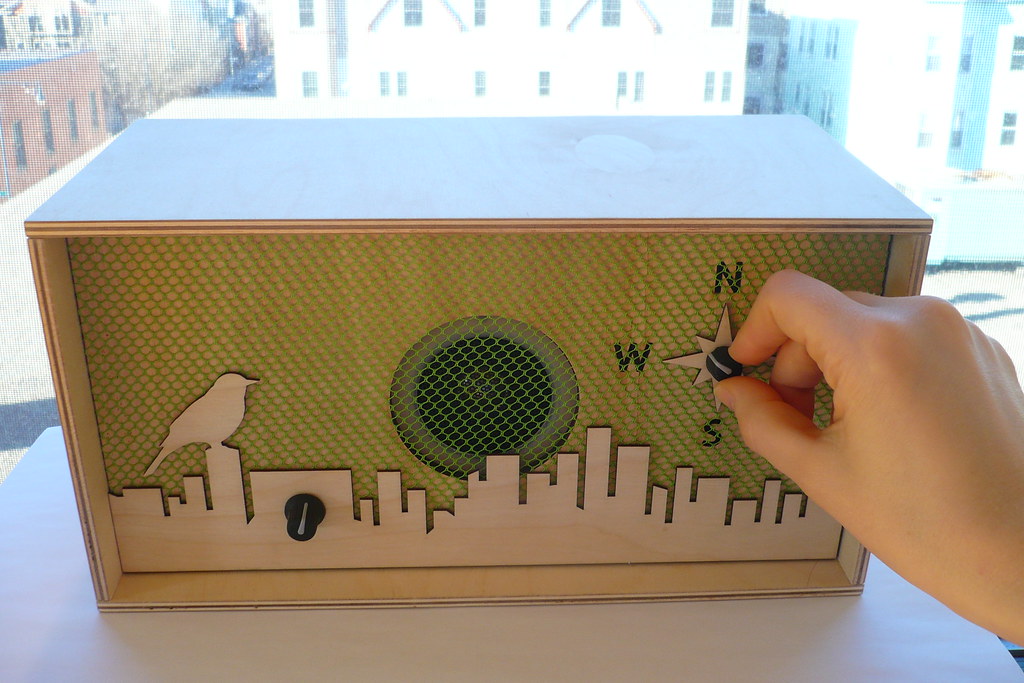
WildUrban Radio


skube


Spotify box from Jordi Parra on Vimeo.
spotify box


What are the possible annotations for Wake-up light?

X


What are the possible annotations for Scentonight?

What are the possible annotations for Fonckel?


What are the possible annotations for Twins?


What are the possible annotations for Goodnight Lamp?

Draw a new sketch based on these annotated portfolios


reference:

What should we expect from research through design?

suggested forms:
   (1) Ving + adj. + N.
   (2) N. and N.
   (3) Ving+ N. + as + N.
   (4)  N. + for + N.
 
suggested concerns:
the functionality of the design (what should it do?) and by implication the value of certain activities (is this worth doing?)
• its aesthetics (what form and appearance should the artifact take?) 
the practicalities of its production (what materials, skills, and tools are needed to make it?) 
the motivation for making (why are we doing this? what are we trying to show?) 
• the identities and capabilities of the people for whom the artifact is intended (what will our users make of this? how can we best design for them?) 
sociopolitical concerns (what sort of culture will this encourage or resist?)


Final project annotated portfolios presentation:
Each group present at least 4 relevant artifacts and their annotations
as "stragegies for annotating portfolios", describe your annotations and design space 
Deadline: 12/14, 2020