final project deadline Jan. 7, 2019
in ACM Extended Abstract Format
project report submitted to (Deadline Jan. 7, 2019)
ACM CHI 2019, Late-Breaking Work
or
student design competition
other submissions:
ACM DIS 2019 pictorial or full paper (Jan. 18, 2019)
DIS Provocation & WIPs (Feb. 8, 2019)
2018年12月16日 星期日

2018年12月9日 星期日
2018年12月2日 星期日
week 13. designing frames of interactive things
1. students present annotated portfolios
2.
2.
Understanding expressions of internet of things from Rung-Huei Liang
3.
能動性 (agency)
知覺交錯模型下的物件能動性.pdf (見FB 社團)
Exercise:
Design your artifacts with the above two frameworks.
Ref:
3.
能動性 (agency)
知覺交錯模型下的物件能動性.pdf (見FB 社團)
Exercise:
Design your artifacts with the above two frameworks.
Ref:
2018年11月25日 星期日
week 12. annotated portfolios
1. what are the annotations of these music players?
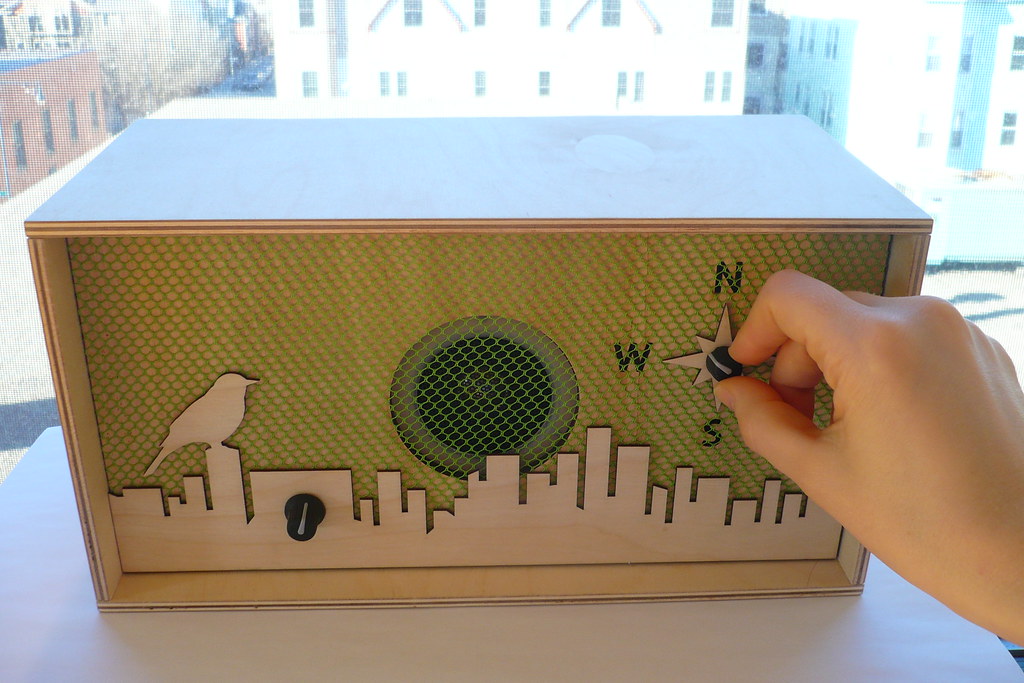
skube
spotify box

http://willodom.com/portfolio/wp-content/uploads/2015/11/Olly-shorten.m4v?_=1
Discuss and sketch a new radio.
Ref: radio design in Pinterest
2.
What are the possible annotations for Wake-up light?
X
What are the possible annotations for Scentonight?
What are the possible annotations for Fonckel?
What are the possible annotations for Twins?
What are the possible annotations for Goodnight Lamp?
Draw a new sketch based on these annotated portfolios
reference:
What should we expect from research through design?
Final project annotated portfolios presentation:
Each group present at least 5 relevant artifacts and their annotations
Deadline: 12/3, 2018
2018年11月18日 星期日
week 11. phenomenology & ethnography
First :
Things making Things: An Ethnography of the Impossible
What is ethnography ?
What is phenomenology?
How do they relate to design?
1.
2. Qualitative methodologies: ethnography, phenomenology, grounded theory and more
3. very short introduction:
Notes on Ethnography and Design
4. Blomberg et al. 經典:
An Ethnographic Approach to Design
5. Ethnographic Data Analysis:
http://pages.cs.wisc.edu/~irene/l17-ethnography_analysis.pdf
Question:
1. how to apply ethnography (/phenomenology) to "cultural probes", how to apply ethnography (/phenomenology) to the study of design artifacts?
2. when to use ethnography? when to use phenomenology?
2018年11月11日 星期日
week 10. framing design
1. work in progress report
check: themes, and strong concepts
example : interaction Tarot
2. Framing design
Framing design in the Third Paradigm
Reference:
The Three Paradigms of HCI
check: themes, and strong concepts
example : interaction Tarot
2. Framing design
Framing design in the Third Paradigm
Reference:
The Three Paradigms of HCI
2018年11月4日 星期日
week 9. strong concepts
1. work-in-progress report of cultural probes
2. Calm technology Exercise and possible probe discussion
3. Strong concepts
1. Jonas Löwgren. 2013. Annotated portfolios and other forms of intermediate-level knowledge.interactions 20, 1 (January 2013), 30-34.
2. Kristina Höök and Jonas Löwgren. 2012. Strong concepts: Intermediate-level knowledge in interaction design research. ACM Trans. Comput.-Hum. Interact. 19, 3, Article 23 (October 2012), 18 pages.
(pp. 23:11- 23:13)
4 constructs:
1. contextual grounding
2. horizontal grounding
3. vertical grounding
4. reflection, articulation, and abstraction
4.
Guidelines for Design Process:
1. Interpret your data with rich interpretation, inspiration, imagination, and discourse.
2. Specify several "themes" related to the above interpretation.
3. Build "strong concepts" (in terms of 4 constructs) to meet these themes
4. Give form to these strong concepts, such as mood boards, and cards.
5. Discuss possible expressions (如何用 expression 開展設計) for your design based on these strong concepts
2. Calm technology Exercise and possible probe discussion
3. Strong concepts
1. Jonas Löwgren. 2013. Annotated portfolios and other forms of intermediate-level knowledge.interactions 20, 1 (January 2013), 30-34.
2. Kristina Höök and Jonas Löwgren. 2012. Strong concepts: Intermediate-level knowledge in interaction design research. ACM Trans. Comput.-Hum. Interact. 19, 3, Article 23 (October 2012), 18 pages.
(pp. 23:11- 23:13)
4 constructs:
1. contextual grounding
2. horizontal grounding
3. vertical grounding
4. reflection, articulation, and abstraction
4.
Between theory and practice: bridging concepts in HCI research
5.
Guidelines for Design Process:
1. Interpret your data with rich interpretation, inspiration, imagination, and discourse.
2. Specify several "themes" related to the above interpretation.
3. Build "strong concepts" (in terms of 4 constructs) to meet these themes
4. Give form to these strong concepts, such as mood boards, and cards.
5. Discuss possible expressions (如何用 expression 開展設計) for your design based on these strong concepts
訂閱:
文章 (Atom)